
Current Public Notices
MATTOON CITY-WIDE CLEANUP SATURDAY, APRIL 11, 2026
MATTOON CITY-WIDE CLEANUP
SATURDAY, APRIL 11, 2026 MATTOON YARD WASTE FACILITY
The City of Mattoon will be conducting a Cleanup Day from 8 A.M. to 11 A.M. on Saturday, April 11,
2026. Roll-off dumpsters will be available at the Mattoon Yard Waste Facility at Shelby Avenue and
Logan Street.
The dumpsters are available for Mattoon residents only. A Driver’s License, or other proof of
residency, is required in order to dispose of material at the site. The site is open for
residential clean-up. The site will not be open to commercial contractors. The load size will be
limited to 1-ton trucks and trailers.
Residents may dispose of following materials ONLY at the City Yard Waste location:
General Waste – Rumpke Waste & Recycling will have dumpsters available at the Yard Waste Facility
for all waste. No Car Parts, Tires, Batteries, Fluorescent Light Bulbs, Liquid Wastes, Concrete,
Brick, Rock, Soil, or Ashes will be accepted.
Yard Waste – The Yard Waste Facility will be open for the disposal of leaves, limbs, grass
clippings, and other plant material. The Yard Waste Facility is open 7 days per week during
daylight hours.
Scrap Metal – Mervis Industries will have a dumpster available at the event for metals and
appliances.
Electronics – The City will collect electronic appliances at the event. The City will deliver the
electronics to Com2 for recycling.
Note: No Car Parts, Tires, Batteries, Fluorescent Light Bulbs, Liquid Wastes, Hazardous
Materials, Concrete, Brick, Rock, Soil, or Ashes will be accepted at this event on April 11, 2026.
Residents bringing debris to the event are asked to line up on Shelby Avenue, entering from the
west. The City will have personnel available to supervise traffic and unloading. Residents are
required to unload their own material. City personnel will be available to assist with heavy
material as needed.
The City of Mattoon will make special collection arrangements, on a case-by-case basis, for
senior citizens, and persons with disabilities. Those residents can call 235-5171, from
7 A.M. to 3 P.M., Monday through Friday to request collection. Special collection requests must be
called in by noon on Wednesday, April 8 to schedule a pickup. Special collections must be at the
curb for collection no later than 7 A.M. on Thursday, April 9.
Special collections are for items that will not fit in a regular weekly tote. No household trash
will be picked up.
David Clark
Public Works Director
City of Mattoon
217-235-5460
Water Quality Update – April 1, 2026
CITY OF MATTOON
Water Quality Update – April 1, 2026
Current Sample
Sample collected on March 30, 2026 showed non-detectable levels of harmful algal bloom neurological toxin in the drinking water at 0.035 ppb which is considered non-detect under the EPA guidelines and the recommended advisory levels of .30 ppb.
As per recent Illinois EPA’s recommendations, sampling and testing will be conducted every two weeks. Results will continue to be posted on the City’s website.
PAST SAMPLES
Sample collected on March 16, 2026 showed non-detectable levels of harmful algal bloom neurological toxin in the drinking water at 0.036 ppb which is considered non-detect under the EPA guidelines and the recommended advisory levels of .30 ppb.
Sample collected on March 15, 2026 showed non-detectable levels of harmful algal bloom neurological toxin in the drinking water at 0.085 ppb which is considered non-detect under the EPA guidelines and the recommended advisory levels of .30 ppb.
Sample collected on March 14, 2026 showed non-detectable levels of harmful algal bloom neurological toxin in the drinking water at 0.049 ppb which is considered non-detect under the EPA guidelines and the recommended advisory levels of .30 ppb.
Sample collected on March 13, 2026 showed non-detectable levels of harmful algal bloom neurological toxin in the drinking water at 0.113 ppb which is considered non-detect under the EPA guidelines and the recommended advisory levels of .30 ppb.
Sample collected on March 12, 2026 showed non-detectable levels of harmful algal bloom neurological toxin in the drinking water at 0.02o ppb which is considered non-detect under the EPA guidelines and the recommended advisory levels of .30 ppb.
Sample collected on March 11, 2026 showed non-detectable levels of harmful algal bloom neurological toxin in the drinking water at 0.053 ppb which is considered non-detect under the EPA guidelines and the recommended advisory levels of .30 ppb.
Sample collected on March 10, 2026 showed non-detectable levels of harmful algal bloom neurological toxin in the drinking water at 0.080 ppb which is considered non-detect under the EPA guidelines and the recommended advisory levels of .30 ppb.
Sample collected on March 09, 2026 showed non-detectable levels of harmful algal bloom neurological toxin in the drinking water at 0.008 ppb which is considered non-detect under the EPA guidelines and the recommended advisory levels of .30 ppb.
Sample collected on February 23, 2026 showed non-detectable levels of harmful algal bloom neurological toxin in the drinking water at 0.069 ppb which is considered non-detect under the EPA guidelines and the recommended advisory levels of .30 ppb.
Sample collected on February 9, 2026 showed non-detectable levels of harmful algal bloom neurological toxin in the drinking water at 0.046 ppb which is considered non-detect under the EPA guidelines and the recommended advisory levels of .30 ppb.
Sample collected on January 27, 2026 showed non-detectable levels of harmful algal bloom neurological toxin in the drinking water at 0.021 ppb which is considered non-detect under the EPA guidelines and the recommended advisory levels of .30 ppb.
Sample collected on January 12, 2026 showed non-detectable levels of harmful algal bloom neurological toxin in the drinking water at 0.000 ppb which is considered non-detect under the EPA guidelines and the recommended advisory levels of .30 ppb.
Sample collected on December 30th showed non-detectable levels of harmful algal bloom neurological toxin in the drinking water at 0.000 ppb which is considered non-detect under the EPA guidelines and the recommended advisory levels of .30 ppb.
Sample collected on December 22nd showed non-detectable levels of harmful algal bloom neurological toxin in the drinking water at 0.096 ppb which is considered non-detect under the EPA guidelines and the recommended advisory levels of .30 ppb.
Sample collected on December 15th showed non-detectable levels of harmful algal bloom neurological toxin in the drinking water at 0.073 ppb which is considered non-detect under the EPA guidelines and the recommended advisory levels of .30 ppb.
Sample collected on December 8th showed non-detectable levels of harmful algal bloom neurological toxin in the drinking water at 0.071 ppb which is considered non-detect under the EPA guidelines and the recommended advisory levels of .30 ppb.
Sample collected on December 1st showed non-detectable levels of harmful algal bloom neurological toxin in the drinking water at 0.092 ppb which is considered non-detect under the EPA recommended advisory levels of .30 ppb.
Sample collected on November 28th showed non-detectable levels of harmful algal bloom neurological toxin in the drinking water at 0.078 ppb which is considered non-detect under the EPA recommended advisory levels of .30 ppb.
Sample collected on November 24th showed non-detectable levels of harmful algal bloom neurological toxin in the drinking water at 0.061 ppb which is considered non-detect under the EPA recommended advisory levels of .30 ppb.
Sample collected on November 20th showed non-detectable levels of harmful algal bloom neurological toxin in the drinking water at 0.028 ppb which is considered non-detect under the EPA recommended advisory levels of .30 ppb.
Sample collected on November 17th showed non-detectable levels of harmful algal bloom neurological toxin in the drinking water at 0.045 ppb which is considered non-detect under the EPA recommended advisory levels of .30 ppb.
Sample collected on November 16th showed non-detectable levels of harmful algal bloom neurological toxin in the drinking water at 0.027 ppb which is considered non-detect under the EPA recommended advisory levels of .30 ppb.
Sample collected on November 15th showed non-detectable levels of harmful algal bloom neurological toxin in the drinking water at 0.082 ppb which is considered non-detect under the EPA recommended advisory levels of .30 ppb.
Sample collected on November 14th showed non-detectable levels of harmful algal bloom neurological toxin in the drinking water at 0.052 ppb which is considered non-detect under the EPA recommended advisory levels of .30 ppb.
Sample collected on November 13th showed non-detectable levels of harmful algal bloom neurological toxin in the drinking water at 0.062 ppb which is considered non-detect under the EPA recommended advisory levels of .30 ppb.
Sample collected on November 12th showed non-detectable levels of harmful algal bloom neurological toxin in the drinking water at 0.006 ppb which is considered non-detect under the EPA recommended advisory levels of .30 ppb.
Sample collected on November 11th showed non-detectable levels of harmful algal bloom neurological toxin in the drinking water at 0.035 ppb which is considered non-detect under the EPA recommended advisory levels of .30 ppb.
Sample collected on November 7th showed non-detectable levels of harmful algal bloom neurological toxin in the drinking water at 0.059 ppb which is considered non-detect under the EPA recommended advisory levels of .30 ppb.
Sample collected on November 6th showed non-detectable levels of harmful algal bloom neurological toxin in the drinking water at 0.072 ppb which is considered non-detect under the EPA recommended advisory levels of .30 ppb.
Sample collected on November 3rd showed non-detectable levels of harmful algal bloom neurological toxin in the drinking water at 0.068 ppb which is considered non-detect under the EPA recommended advisory levels of .30 ppb.
Sample collected on October 30th showed non-detectable levels of harmful algal bloom neurological toxin in the drinking water at 0.098 ppb which is considered non-detect under the EPA recommended advisory levels of .30 ppb.
Sample collected on October 27th showed non-detectable levels of harmful algal bloom neurological toxin in the drinking water at 0.059 ppb which is considered non-detect under the EPA recommended advisory levels of .30 ppb.
Sample collected on October 23rd showed non-detectable levels of harmful algal bloom neurological toxin in the drinking water at 0.086 ppb which is considered non-detect under the EPA recommended advisory levels of .30 ppb.
Sample collected on October 20th showed non-detectable levels of harmful algal bloom neurological toxin in the drinking water at 0.074 ppb which is considered non-detect under the EPA recommended advisory levels of .30 ppb.
Sample collected on October 16th showed non-detectable levels of harmful algal bloom neurological toxin in the drinking water at 0.036 ppb which is considered non-detect under the EPA recommended advisory levels of .30 ppb.
Sample collected on October 14th showed non-detectable levels of harmful algal bloom neurological toxin in the drinking water at 0.061 ppb which is considered non-detect under the EPA recommended advisory levels of .30 ppb.
Sample collected on October 9th showed non-detectable levels of harmful algal bloom neurological toxin in the drinking water at 0.073 ppb which is considered non-detect under the EPA recommended advisory levels of .30 ppb.
Sample collected on October 2nd showed non-detectable levels of harmful algal bloom neurological toxin in the drinking water at 0.054 ppb which is considered non-detect under the EPA recommended advisory levels of .30 ppb.
Sample collected on September 29th showed non-detectable levels of harmful algal bloom neurological toxin in the drinking water at 0.000 ppb which is considered non-detect under the EPA recommended advisory levels of .30 ppb.
Sample collected on September 22nd showed non-detectable levels of harmful algal bloom neurological toxin in the drinking water at 0.040 ppb which is considered non-detect under the EPA recommended advisory levels of .30 ppb. IEPA did retest Monday’s sample.
Sample collected on September 18th showed non-detectable levels of harmful algal bloom neurological toxin in the drinking water at 0.009 ppb which is considered non-detect under the EPA recommended advisory levels of .30 ppb.
Sample collected on September 15th showed non-detectable levels of harmful algal bloom neurological toxin in the drinking water at 0.000 ppb which is considered non-detect under the EPA recommended advisory levels of .30 ppb.
Sample collected on September 11th showed non-detectable levels of harmful algal bloom neurological toxin in the drinking water at 0.000 ppb which is considered non-detect under the EPA recommended advisory levels of .30 ppb.
Sample collected on September 8th showed non-detectable levels of harmful algal bloom neurological toxin in the drinking water at 0.083 ppb which is considered non-detect under the EPA recommended advisory levels of .30 ppb.
Sample collected on September 4th showed non-detectable levels of harmful algal bloom neurological toxin in the drinking water at 0.000 ppb which is considered non-detect under the EPA recommended advisory levels of .30 ppb.
Sample collected on September 2nd showed non-detectable levels of harmful algal bloom neurological toxin in the drinking water at 0.059 ppb which is considered non-detect under the EPA recommended advisory levels of .30 ppb.
Sample collected on August 28th showed non-detectable levels of harmful algal bloom neurological toxin in the drinking water at 0.026 ppb which is considered non-detect under the EPA recommended advisory levels of .30 ppb.
Sample collected on August 21st showed non-detectable levels of harmful algal bloom neurological toxin in the drinking water at 0.068 ppb which is considered non-detect under the EPA recommended advisory levels of .30 ppb.
Sample collected on August 18th showed non-detectable levels of harmful algal bloom neurological toxin in the drinking water at 0.014 ppb which is considered non-detect under the EPA recommended advisory levels of .30 ppb.
Sample collected on August 14th showed non-detectable levels of harmful algal bloom neurological toxin in the drinking water at 0.036 ppb which is considered non-detect under the EPA recommended advisory levels of .30 ppb.
Sample collected on August 11th showed non-detectable levels of harmful algal bloom neurological toxin in the drinking water at 0.036 ppb which is considered non-detect under the EPA recommended advisory levels of .30 ppb.
Sample collected on August 7th showed non-detectable levels of harmful algal bloom neurological toxin in the drinking water at 0.000 ppb which is considered non-detect under the EPA recommended advisory levels of .30 ppb.
Sample collected on August 4th showed non-detectable levels of harmful algal bloom neurological toxin in the drinking water at 0.000 ppb which is considered non-detect under the EPA recommended advisory levels of .30 ppb.
Sample collected on July 31st showed non-detectable levels of harmful algal bloom neurological toxin in the drinking water at 0.000 ppb which is considered non-detect under the EPA recommended advisory levels of .30 ppb.
Sample collected on July 28th showed non-detectable levels of harmful algal bloom neurological toxin in the drinking water at 0.042 ppb which is considered non-detect under the EPA recommended advisory levels of .30 ppb.
Sample collected on July 24th showed non-detectable levels of harmful algal bloom neurological toxin in the drinking water at 0.038 ppb which is considered non-detect under the EPA recommended advisory levels of .30 ppb.
Sample collected on July 21st showed non-detectable levels of harmful algal bloom neurological toxin in the drinking water at 0.14 ppb which is considered non-detect under the EPA recommended advisory levels of .30 ppb.
Samples collected on July 18th showed harmful algal bloom neurological toxin in the drinking water at .10 ppb which is considered non-detect under the EPA recommended advisory levels of .30 ppb.
Samples collected on July 17th showed harmful algal bloom neurological toxin in the drinking water at .058 ppb which is considered non-detect under the EPA recommended advisory levels of .30 ppb.
Samples collected on July 16th showed harmful algal bloom neurological toxin in the drinking water at .215 ppb which is under the EPA recommended advisory levels of .30 ppb.
WHAT ACTIONS HAS THE CITY OF MATTOON TAKEN TO CORRECT THE PROBLEM?
The City of Mattoon took the following actions to reduce harmful algal bloom neurological toxin levels:
- Contracted with a consultant who recommended both short-term and long-term solutions.
- Increased the Powder-Activated Carbon (PAC).
- Increased chlorine feed rates.
- Performed directional flushing of distribution system based on IEPA recommendations.
- Developing long-term treatment options, including lake and plant treatment.
Notice of Public Hearing – March 17th at 6pm
City of Mattoon, Illinois
Tax Increment Financing Redevelopment
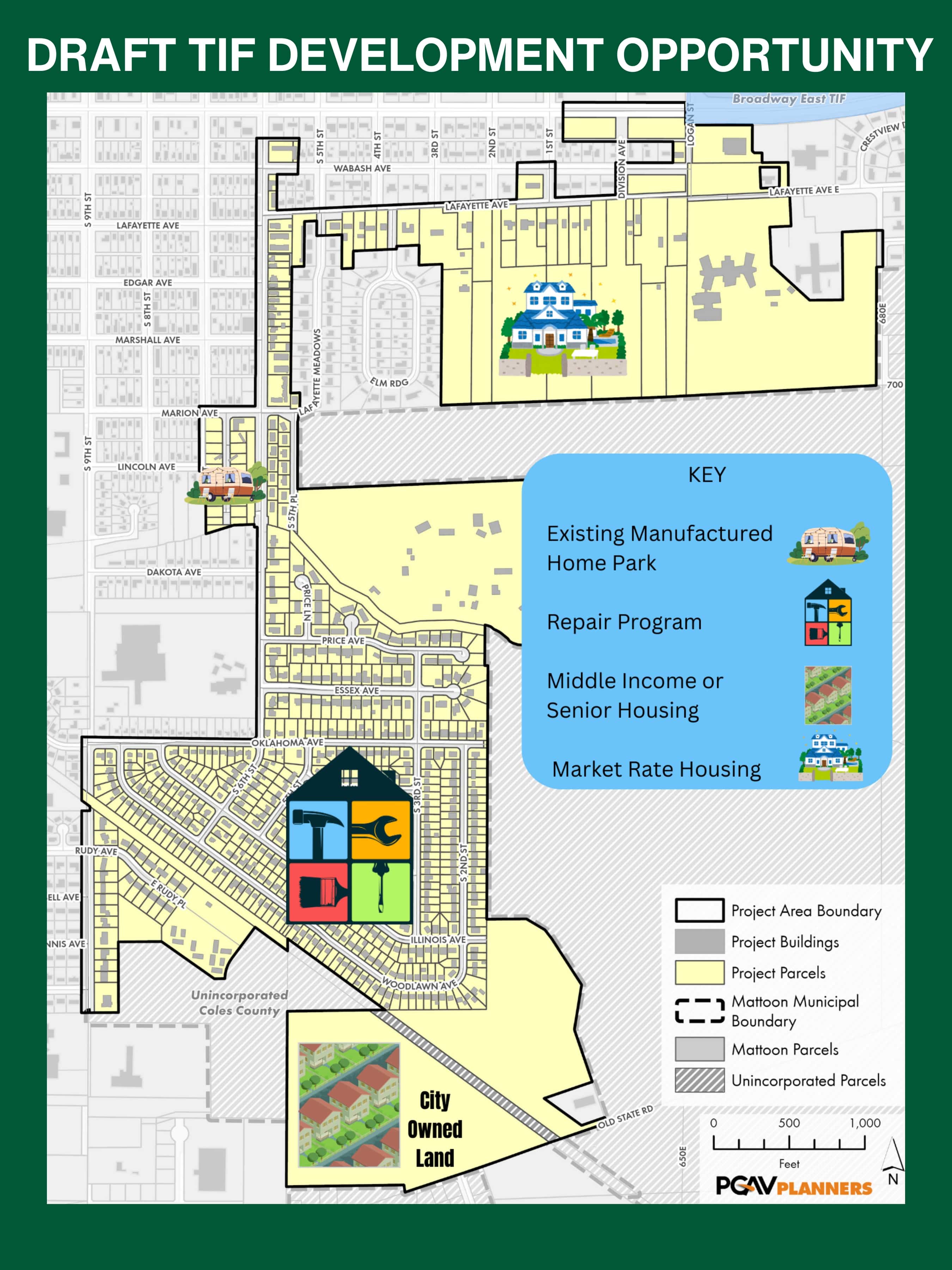
Plan and Project for TIF 5 Redevelopment Project Area
-
The City will hold a public hearing concerning the TIF Plan on March 17, 2026 at 208 North 19th Street, Mattoon, Illinois 61938 at 6:00 PM.
-
A copy of the TIF 5 Plan, which includes a boundary map of the areas proposed to be included in the TIF District, is available for public inspection at the City Clerk’s Office located at 208 North 19th Street, Mattoon, IL 61938. The purpose of TIF 5 Redevelopment Plan and Project is to induce private and public investment in the renovation or redevelopment of properties located within the areas included in the TIF District that will eliminate existing blighting factors and ultimately enhance the tax base of the community. Additionally, the TIF District is intended to help fund public improvements to roadways, utilities, and infrastructure in the district.
-
All interested persons will be given an opportunity to be heard at the public hearing.
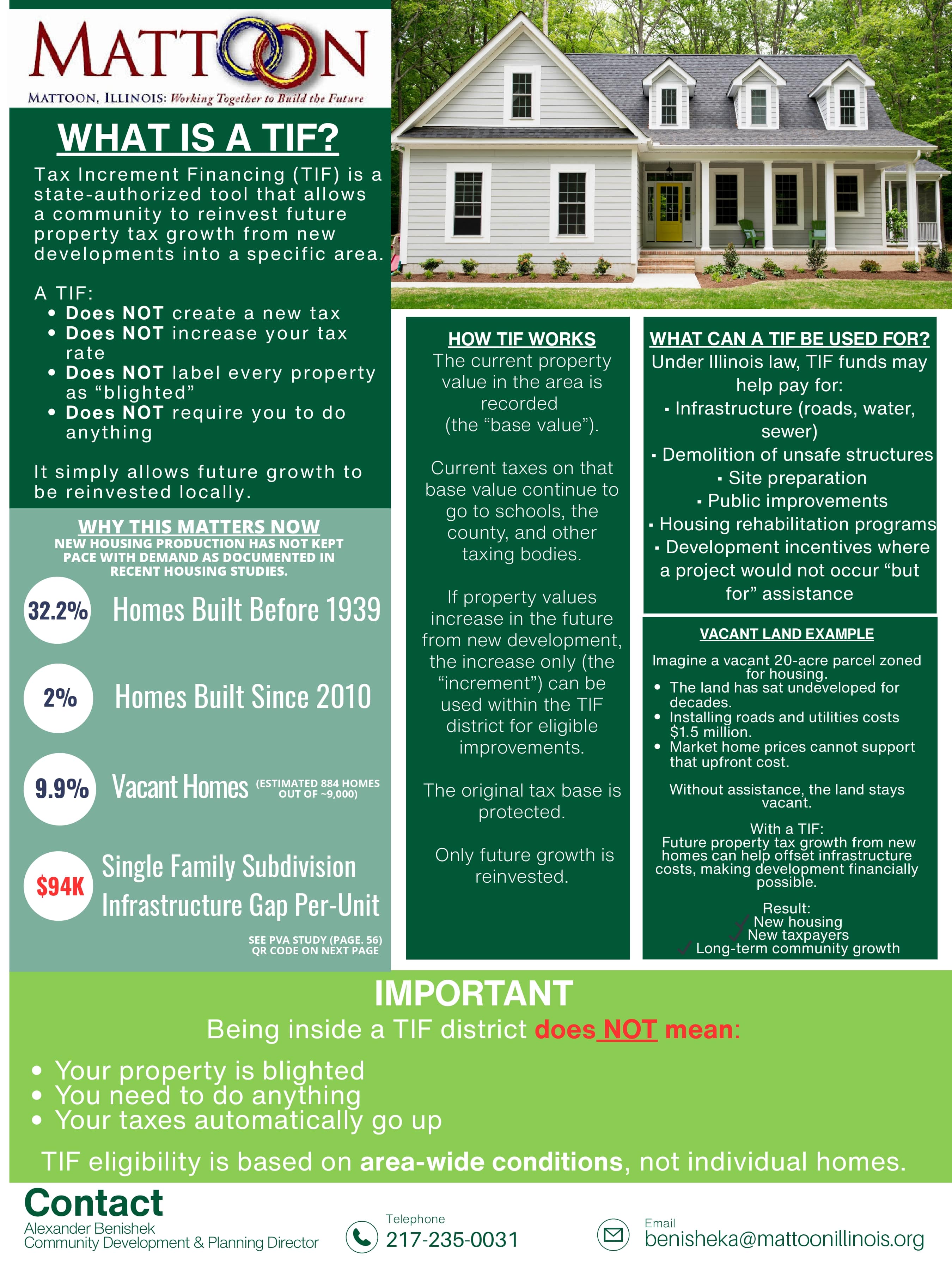
TIF Informational Flyer

Lake Mattoon Wake Boat Committee
Lake Mattoon Wakeboat Advisory Committee Meetings
Date: March 5
Time: 7:00 PM
Location: Lakeside Timbers RV Campground – 49 County Rd. 1250 N, Neoga
Date: March 9
Time: 7:00 PM
Location: Mattoon Public Library – Basement Community Room
Please enter the library using the doors located by the book drop.
March 9 is the last of the series of meetings. Public comments will be used to help recommend a wake boat ordinance.
All interested community members are welcome to attend.
Mattoon Safety Action Plan
The City of Mattoon is dedicated to ensuring the safety of its residents and has developed a Safety Action Plan. The plan details the measures to enhance street safety through improved roadway design, appropriate speed limits, and a shared commitment to safety.
Every Roadway Death is Preventable
View the MSAP by clicking here, and follow the City of Mattoon to learn more about how you can help make the City Roadways Safer.
Update – 2025 City of Mattoon Tree Planting Program
UPDATE: All trees have now been planted. Thanks to the Lumpkin Family Foundation we were able to plant 84 trees all over the City of Matton this fall. Also, a big thank you goes out to all that participated this.
Monday, November 17, 2025, Bloomfield Garden Center will begin auguring holes for trees. Holes will be approximately three (3) feet in diameter. They will augur approximately 50% of the locations the first day or two and then start planting the trees. Once the first batch of trees are planted, they will start auguring for the remaining locations and following with the planting of those. The work will start in the NE and NW sections of town, and the second batch will be in the SW and SE portions of town. All said it is expected all trees will be planted by before Thanksgiving.
Thanks !
David Clark, PE
Public Works Director
City of Mattoon
208 N 19th Street
Mattoon, IL 61938
217.235.5460 Office
309.253.4807 Cell
2025 City of Mattoon Tree Planting Program
First, a huge thank you to the Lumpkin Family Foundation for funding the tree planting program. All tree orders have now been placed, and we are awaiting the suppliers to start digging the trees. Due to the very dry conditions we have been experiencing they are waiting for more moisture to get into the ground so the tree balls will hold together. The digging of holes for the trees will come first and the actual planting will follow very soon after. The operation is expected to begin around mid-November and for most of them to be planted by Thanksgiving. Right now, we plan to start in the NE portion of the city and work counterclockwise around the city. Once the trees have been planted it is the recipient’s responsibility to care for them.
Thank you to all who have participated this year, and we look forward to doing this again next at about the same time.
Thanks !
David Clark, PE
Public Works Director
City of Mattoon
208 N 19th Street
Mattoon, IL 61938
217.235.5460 Office
309.253.4807 Cell
Yard Waste Facility
Starting October 10, 2025, the City of Mattoon Yard Waste Facility on North Logan Street will close at dark and reopen every day at 7:00 am.
David Clark, PE
Public Works Director
City of Mattoon
208 N 19th Street
Mattoon, IL 61938
217.235.5460
Oil and Chipping for City Streets Has Ended
Oil and chip operations on city streets has ended for this year. Due to a shortage of materials, streets we were unable to get to this year will be placed on the schedule for next year.
If you have any questions, please contact:
David Clark, PE
Public Works Director
City of Mattoon
208 N 19th Street
Mattoon, IL 61938
217.235.5460 Office
309.253.4807 Cell