
Current Public Notices
Fiber Installation Update
Fiber Installation Update
October 7, 2026
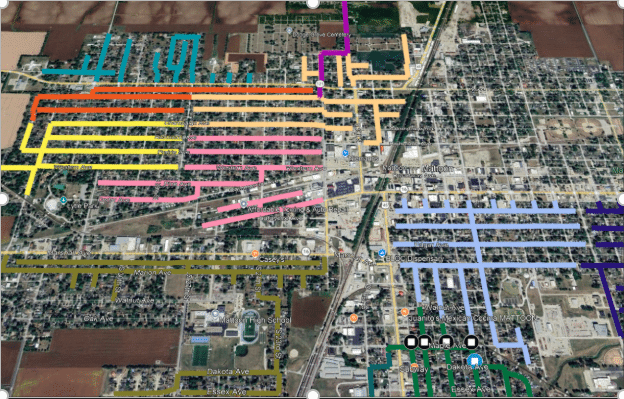
Fiber installation continues to make progress throughout Mattoon. The areas shown in yellow and light blue on the accompanying map are now complete, and the City will begin inspecting these areas in the near future. Fiber installation has not yet been completed in the other identified areas.
As work is completed in each area, Seamless Fiber Innovations will return to repair and restore yards and other areas disturbed during installation. We appreciate residents’ patience as crews complete both installation and restoration work. If you notice an issue related to the fiber installation, please submit it through the City’s iWorQ Citizen Engagement portal. Using the portal helps us document your concern and route it to the appropriate staff for follow-up.
Report a Fiber Installation Concern: https://mattoonrequest.portal.iworq.net/portalhome/mattoonrequest
Thank you for your patience and cooperation as this infrastructure work continues throughout our community.
Roadwork and Street Closures
City of Mattoon Fiber Installation Update
City of Mattoon Fiber Installation Update
October 2, 2026
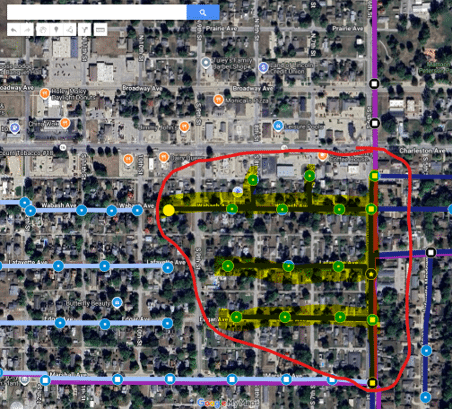
Seamless Fiber Innovations crews will continue fiber installation work at several locations throughout Mattoon next week. Crews will continue working along South 21st Street and Stinson Avenue. Once work on Stinson Avenue is complete, that crew will move to the area near 6th Street and Lafayette Avenue, as identified on the accompanying map.
Residents and motorists in these areas may see crews, equipment, and temporary work zones. Please use caution when traveling through active work areas.
We appreciate your patience as fiber infrastructure improvements continue throughout the community.
Yard Waste Facility Update
Help Us Keep Mattoon’s Yard Waste Facility Available to Our Community
October 1, 2026
The City of Mattoon’s yard waste facility on North Logan Street provides Mattoon residents with a convenient place to dispose of residential yard waste. We appreciate everyone who uses the facility responsibly and helps us keep this service available to the community.
Recently, City staff have found an increase in materials that cannot be accepted at the facility, including commercial waste, plastic bags, concrete, bricks, construction debris, and hazardous materials. These items can damage equipment, create safety concerns, and increase the cost of operating the facility.
The facility is intended for residential organic yard waste, including leaves, grass clippings, and small branches. Keeping other materials out helps our Street Department safely and efficiently process yard waste and maintain a clean facility for Mattoon residents. To help protect this community resource, the City is increasing 24-hour camera monitoring and periodic staff checks at the facility. Staff may verify residency and inspect loads when necessary. The City will continue to enforce ordinances regarding prohibited dumping.
Our goal is to keep the yard waste facility open, safe, at no-cost, and available to Mattoon residents. Continued disposal of prohibited materials could require temporary closures for cleanup or maintenance, so we are asking everyone to help us take care of this shared resource.
If you see illegal dumping or have questions about what can be accepted, please contact:
Mattoon Street Department: (217) 235-5171
Mattoon Police Department: (217) 235-5451
Thank you for doing your part to keep this service available for our community.
Water Quality Update – September 23, 2026
CITY OF MATTOON
Water Quality Update – September 23, 2026
Current Sample
Sample collected on September 21, 2026 showed non-detectable levels of harmful algal bloom neurological toxin in the drinking water at 0.06 ppb which is considered non-detect under the EPA guidelines and the recommended advisory levels of .30 ppb.
As per recent Illinois EPA’s recommendations, sampling and testing will be conducted every two weeks. Results will continue to be posted on the City’s website.
PAST SAMPLES
Sample collected on September 7, 2026 showed non-detectable levels of harmful algal bloom neurological toxin in the drinking water at 0.00 ppb which is considered non-detect under the EPA guidelines and the recommended advisory levels of .30 ppb.
Sample collected on August 24, 2026 showed non-detectable levels of harmful algal bloom neurological toxin in the drinking water at 0.053 ppb which is considered non-detect under the EPA guidelines and the recommended advisory levels of .30 ppb.
Sample collected on August 10, 2026 showed non-detectable levels of harmful algal bloom neurological toxin in the drinking water at 0.009 ppb which is considered non-detect under the EPA guidelines and the recommended advisory levels of .30 ppb.
Sample collected on July 26, 2026 showed non-detectable levels of harmful algal bloom neurological toxin in the drinking water at 0.071 ppb which is considered non-detect under the EPA guidelines and the recommended advisory levels of .30 ppb.
Sample collected on July 13, 2026 showed non-detectable levels of harmful algal bloom neurological toxin in the drinking water at 0.104 ppb which is considered non-detect under the EPA guidelines and the recommended advisory levels of .30 ppb.
Sample collected on July 12, 2026 showed non-detectable levels of harmful algal bloom neurological toxin in the drinking water at 0.098 ppb which is considered non-detect under the EPA guidelines and the recommended advisory levels of .30 ppb.
Sample collected on July 11, 2026 showed non-detectable levels of harmful algal bloom neurological toxin in the drinking water at 0.069 ppb which is considered non-detect under the EPA guidelines and the recommended advisory levels of .30 ppb.
Sample collected on June 30, 2026 showed non-detectable levels of harmful algal bloom neurological toxin in the drinking water at 0.030 ppb which is considered non-detect under the EPA guidelines and the recommended advisory levels of .30 ppb.
Sample collected on June 15, 2026 showed non-detectable levels of harmful algal bloom neurological toxin in the drinking water at 0.039 ppb which is considered non-detect under the EPA guidelines and the recommended advisory levels of .30 ppb.
Sample collected on June 1, 2026 showed non-detectable levels of harmful algal bloom neurological toxin in the drinking water at 0.007 ppb which is considered non-detect under the EPA guidelines and the recommended advisory levels of .30 ppb.
Sample collected on May 18, 2026 showed non-detectable levels of harmful algal bloom neurological toxin in the drinking water at 0.042 ppb which is considered non-detect under the EPA guidelines and the recommended advisory levels of .30 ppb.
Sample collected on May 14, 2026 showed non-detectable levels of harmful algal bloom neurological toxin in the drinking water at 0.000 ppb which is considered non-detect under the EPA guidelines and the recommended advisory levels of .30 ppb.
Sample collected on May 13, 2026 showed non-detectable levels of harmful algal bloom neurological toxin in the drinking water at 0.019 ppb which is considered non-detect under the EPA guidelines and the recommended advisory levels of .30 ppb.
Sample collected on May 12, 2026 showed non-detectable levels of harmful algal bloom neurological toxin in the drinking water at 0.034 ppb which is considered non-detect under the EPA guidelines and the recommended advisory levels of .30 ppb.
Sample collected on May 11, 2026 showed non-detectable levels of harmful algal bloom neurological toxin in the drinking water at 0.000 ppb which is considered non-detect under the EPA guidelines and the recommended advisory levels of .30 ppb.
Sample collected on May 10, 2026 showed non-detectable levels of harmful algal bloom neurological toxin in the drinking water at 0.017 ppb which is considered non-detect under the EPA guidelines and the recommended advisory levels of .30 ppb.
Sample collected on May 9, 2026 showed non-detectable levels of harmful algal bloom neurological toxin in the drinking water at 0.000 ppb which is considered non-detect under the EPA guidelines and the recommended advisory levels of .30 ppb.
Sample collected on May 8, 2026 showed non-detectable levels of harmful algal bloom neurological toxin in the drinking water at 0.013 ppb which is considered non-detect under the EPA guidelines and the recommended advisory levels of .30 ppb.
Sample collected on May 4, 2026 showed non-detectable levels of harmful algal bloom neurological toxin in the drinking water at 0.031 ppb which is considered non-detect under the EPA guidelines and the recommended advisory levels of .30 ppb.
Sample collected on April 20, 2026 showed non-detectable levels of harmful algal bloom neurological toxin in the drinking water at 0.059 ppb which is considered non-detect under the EPA guidelines and the recommended advisory levels of .30 ppb.
Sample collected on March 30, 2026 showed non-detectable levels of harmful algal bloom neurological toxin in the drinking water at 0.035 ppb which is considered non-detect under the EPA guidelines and the recommended advisory levels of .30 ppb.
Sample collected on March 16, 2026 showed non-detectable levels of harmful algal bloom neurological toxin in the drinking water at 0.036 ppb which is considered non-detect under the EPA guidelines and the recommended advisory levels of .30 ppb.
Sample collected on March 15, 2026 showed non-detectable levels of harmful algal bloom neurological toxin in the drinking water at 0.085 ppb which is considered non-detect under the EPA guidelines and the recommended advisory levels of .30 ppb.
Sample collected on March 14, 2026 showed non-detectable levels of harmful algal bloom neurological toxin in the drinking water at 0.049 ppb which is considered non-detect under the EPA guidelines and the recommended advisory levels of .30 ppb.
Sample collected on March 13, 2026 showed non-detectable levels of harmful algal bloom neurological toxin in the drinking water at 0.113 ppb which is considered non-detect under the EPA guidelines and the recommended advisory levels of .30 ppb.
Sample collected on March 12, 2026 showed non-detectable levels of harmful algal bloom neurological toxin in the drinking water at 0.02o ppb which is considered non-detect under the EPA guidelines and the recommended advisory levels of .30 ppb.
Sample collected on March 11, 2026 showed non-detectable levels of harmful algal bloom neurological toxin in the drinking water at 0.053 ppb which is considered non-detect under the EPA guidelines and the recommended advisory levels of .30 ppb.
Sample collected on March 10, 2026 showed non-detectable levels of harmful algal bloom neurological toxin in the drinking water at 0.080 ppb which is considered non-detect under the EPA guidelines and the recommended advisory levels of .30 ppb.
Sample collected on March 09, 2026 showed non-detectable levels of harmful algal bloom neurological toxin in the drinking water at 0.008 ppb which is considered non-detect under the EPA guidelines and the recommended advisory levels of .30 ppb.
Sample collected on February 23, 2026 showed non-detectable levels of harmful algal bloom neurological toxin in the drinking water at 0.069 ppb which is considered non-detect under the EPA guidelines and the recommended advisory levels of .30 ppb.
Sample collected on February 9, 2026 showed non-detectable levels of harmful algal bloom neurological toxin in the drinking water at 0.046 ppb which is considered non-detect under the EPA guidelines and the recommended advisory levels of .30 ppb.
Sample collected on January 27, 2026 showed non-detectable levels of harmful algal bloom neurological toxin in the drinking water at 0.021 ppb which is considered non-detect under the EPA guidelines and the recommended advisory levels of .30 ppb.
Sample collected on January 12, 2026 showed non-detectable levels of harmful algal bloom neurological toxin in the drinking water at 0.000 ppb which is considered non-detect under the EPA guidelines and the recommended advisory levels of .30 ppb.
Sample collected on December 30th showed non-detectable levels of harmful algal bloom neurological toxin in the drinking water at 0.000 ppb which is considered non-detect under the EPA guidelines and the recommended advisory levels of .30 ppb.
Sample collected on December 22nd showed non-detectable levels of harmful algal bloom neurological toxin in the drinking water at 0.096 ppb which is considered non-detect under the EPA guidelines and the recommended advisory levels of .30 ppb.
Sample collected on December 15th showed non-detectable levels of harmful algal bloom neurological toxin in the drinking water at 0.073 ppb which is considered non-detect under the EPA guidelines and the recommended advisory levels of .30 ppb.
Sample collected on December 8th showed non-detectable levels of harmful algal bloom neurological toxin in the drinking water at 0.071 ppb which is considered non-detect under the EPA guidelines and the recommended advisory levels of .30 ppb.
Sample collected on December 1st showed non-detectable levels of harmful algal bloom neurological toxin in the drinking water at 0.092 ppb which is considered non-detect under the EPA recommended advisory levels of .30 ppb.
Sample collected on November 28th showed non-detectable levels of harmful algal bloom neurological toxin in the drinking water at 0.078 ppb which is considered non-detect under the EPA recommended advisory levels of .30 ppb.
Sample collected on November 24th showed non-detectable levels of harmful algal bloom neurological toxin in the drinking water at 0.061 ppb which is considered non-detect under the EPA recommended advisory levels of .30 ppb.
Sample collected on November 20th showed non-detectable levels of harmful algal bloom neurological toxin in the drinking water at 0.028 ppb which is considered non-detect under the EPA recommended advisory levels of .30 ppb.
Sample collected on November 17th showed non-detectable levels of harmful algal bloom neurological toxin in the drinking water at 0.045 ppb which is considered non-detect under the EPA recommended advisory levels of .30 ppb.
Sample collected on November 16th showed non-detectable levels of harmful algal bloom neurological toxin in the drinking water at 0.027 ppb which is considered non-detect under the EPA recommended advisory levels of .30 ppb.
Sample collected on November 15th showed non-detectable levels of harmful algal bloom neurological toxin in the drinking water at 0.082 ppb which is considered non-detect under the EPA recommended advisory levels of .30 ppb.
Sample collected on November 14th showed non-detectable levels of harmful algal bloom neurological toxin in the drinking water at 0.052 ppb which is considered non-detect under the EPA recommended advisory levels of .30 ppb.
Sample collected on November 13th showed non-detectable levels of harmful algal bloom neurological toxin in the drinking water at 0.062 ppb which is considered non-detect under the EPA recommended advisory levels of .30 ppb.
Sample collected on November 12th showed non-detectable levels of harmful algal bloom neurological toxin in the drinking water at 0.006 ppb which is considered non-detect under the EPA recommended advisory levels of .30 ppb.
Sample collected on November 11th showed non-detectable levels of harmful algal bloom neurological toxin in the drinking water at 0.035 ppb which is considered non-detect under the EPA recommended advisory levels of .30 ppb.
Sample collected on November 7th showed non-detectable levels of harmful algal bloom neurological toxin in the drinking water at 0.059 ppb which is considered non-detect under the EPA recommended advisory levels of .30 ppb.
Sample collected on November 6th showed non-detectable levels of harmful algal bloom neurological toxin in the drinking water at 0.072 ppb which is considered non-detect under the EPA recommended advisory levels of .30 ppb.
Sample collected on November 3rd showed non-detectable levels of harmful algal bloom neurological toxin in the drinking water at 0.068 ppb which is considered non-detect under the EPA recommended advisory levels of .30 ppb.
Sample collected on October 30th showed non-detectable levels of harmful algal bloom neurological toxin in the drinking water at 0.098 ppb which is considered non-detect under the EPA recommended advisory levels of .30 ppb.
Sample collected on October 27th showed non-detectable levels of harmful algal bloom neurological toxin in the drinking water at 0.059 ppb which is considered non-detect under the EPA recommended advisory levels of .30 ppb.
Sample collected on October 23rd showed non-detectable levels of harmful algal bloom neurological toxin in the drinking water at 0.086 ppb which is considered non-detect under the EPA recommended advisory levels of .30 ppb.
Sample collected on October 20th showed non-detectable levels of harmful algal bloom neurological toxin in the drinking water at 0.074 ppb which is considered non-detect under the EPA recommended advisory levels of .30 ppb.
Sample collected on October 16th showed non-detectable levels of harmful algal bloom neurological toxin in the drinking water at 0.036 ppb which is considered non-detect under the EPA recommended advisory levels of .30 ppb.
Sample collected on October 14th showed non-detectable levels of harmful algal bloom neurological toxin in the drinking water at 0.061 ppb which is considered non-detect under the EPA recommended advisory levels of .30 ppb.
Sample collected on October 9th showed non-detectable levels of harmful algal bloom neurological toxin in the drinking water at 0.073 ppb which is considered non-detect under the EPA recommended advisory levels of .30 ppb.
Sample collected on October 2nd showed non-detectable levels of harmful algal bloom neurological toxin in the drinking water at 0.054 ppb which is considered non-detect under the EPA recommended advisory levels of .30 ppb.
Sample collected on September 29th showed non-detectable levels of harmful algal bloom neurological toxin in the drinking water at 0.000 ppb which is considered non-detect under the EPA recommended advisory levels of .30 ppb.
Sample collected on September 22nd showed non-detectable levels of harmful algal bloom neurological toxin in the drinking water at 0.040 ppb which is considered non-detect under the EPA recommended advisory levels of .30 ppb. IEPA did retest Monday’s sample.
Sample collected on September 18th showed non-detectable levels of harmful algal bloom neurological toxin in the drinking water at 0.009 ppb which is considered non-detect under the EPA recommended advisory levels of .30 ppb.
Sample collected on September 15th showed non-detectable levels of harmful algal bloom neurological toxin in the drinking water at 0.000 ppb which is considered non-detect under the EPA recommended advisory levels of .30 ppb.
Sample collected on September 11th showed non-detectable levels of harmful algal bloom neurological toxin in the drinking water at 0.000 ppb which is considered non-detect under the EPA recommended advisory levels of .30 ppb.
Sample collected on September 8th showed non-detectable levels of harmful algal bloom neurological toxin in the drinking water at 0.083 ppb which is considered non-detect under the EPA recommended advisory levels of .30 ppb.
Sample collected on September 4th showed non-detectable levels of harmful algal bloom neurological toxin in the drinking water at 0.000 ppb which is considered non-detect under the EPA recommended advisory levels of .30 ppb.
Sample collected on September 2nd showed non-detectable levels of harmful algal bloom neurological toxin in the drinking water at 0.059 ppb which is considered non-detect under the EPA recommended advisory levels of .30 ppb.
Sample collected on August 28th showed non-detectable levels of harmful algal bloom neurological toxin in the drinking water at 0.026 ppb which is considered non-detect under the EPA recommended advisory levels of .30 ppb.
Sample collected on August 21st showed non-detectable levels of harmful algal bloom neurological toxin in the drinking water at 0.068 ppb which is considered non-detect under the EPA recommended advisory levels of .30 ppb.
Sample collected on August 18th showed non-detectable levels of harmful algal bloom neurological toxin in the drinking water at 0.014 ppb which is considered non-detect under the EPA recommended advisory levels of .30 ppb.
Sample collected on August 14th showed non-detectable levels of harmful algal bloom neurological toxin in the drinking water at 0.036 ppb which is considered non-detect under the EPA recommended advisory levels of .30 ppb.
Sample collected on August 11th showed non-detectable levels of harmful algal bloom neurological toxin in the drinking water at 0.036 ppb which is considered non-detect under the EPA recommended advisory levels of .30 ppb.
Sample collected on August 7th showed non-detectable levels of harmful algal bloom neurological toxin in the drinking water at 0.000 ppb which is considered non-detect under the EPA recommended advisory levels of .30 ppb.
Sample collected on August 4th showed non-detectable levels of harmful algal bloom neurological toxin in the drinking water at 0.000 ppb which is considered non-detect under the EPA recommended advisory levels of .30 ppb.
Sample collected on July 31st showed non-detectable levels of harmful algal bloom neurological toxin in the drinking water at 0.000 ppb which is considered non-detect under the EPA recommended advisory levels of .30 ppb.
Sample collected on July 28th showed non-detectable levels of harmful algal bloom neurological toxin in the drinking water at 0.042 ppb which is considered non-detect under the EPA recommended advisory levels of .30 ppb.
Sample collected on July 24th showed non-detectable levels of harmful algal bloom neurological toxin in the drinking water at 0.038 ppb which is considered non-detect under the EPA recommended advisory levels of .30 ppb.
Sample collected on July 21st showed non-detectable levels of harmful algal bloom neurological toxin in the drinking water at 0.14 ppb which is considered non-detect under the EPA recommended advisory levels of .30 ppb.
Samples collected on July 18th showed harmful algal bloom neurological toxin in the drinking water at .10 ppb which is considered non-detect under the EPA recommended advisory levels of .30 ppb.
Samples collected on July 17th showed harmful algal bloom neurological toxin in the drinking water at .058 ppb which is considered non-detect under the EPA recommended advisory levels of .30 ppb.
Samples collected on July 16th showed harmful algal bloom neurological toxin in the drinking water at .215 ppb which is under the EPA recommended advisory levels of .30 ppb.
WHAT ACTIONS HAS THE CITY OF MATTOON TAKEN TO CORRECT THE PROBLEM?
The City of Mattoon took the following actions to reduce harmful algal bloom neurological toxin levels:
- Contracted with a consultant who recommended both short-term and long-term solutions.
- Increased the Powder-Activated Carbon (PAC).
- Increased chlorine feed rates.
- Performed directional flushing of distribution system based on IEPA recommendations.
- Developing long-term treatment options, including lake and plant treatment.
City Council Passes Data Center Moratorium
City Council Passes Data Center Moratorium
September 3, 2026
At Tuesday night’s City Council meeting, the Mattoon City Council passed a moratorium on large-scale data center developments. A moratorium is a temporary pause or suspension of activity.
The moratorium applies to any new data center developments larger than 21,780 square feet, or about half an acre, within Mattoon and the area up to 1.5 miles outside City limits where the City has zoning authority. This size limit is relatively small compared with many large, hyperscale data center projects, which can include much larger buildings or groups of buildings on hundreds of acres.
The moratorium does not stop existing businesses from continuing to operate. It allows the few existing businesses that may fall under the City’s definition of a data center to continue their current operations. However, the City will not accept new applications for data centers larger than 21,780 square feet while the moratorium is in place.
Our community members have raised valid questions about how large data centers could affect our water, environment, health, power costs, City services, and finances. City Council members have also raised many of these questions.
The moratorium gives the City time to study these issues, determining the possible costs, benefits, and impacts so the City Council can make the most informed decisions.
The moratorium will be renewed each year and requires the City Council to take action to change or end it.
Thank you to everyone who has shared questions, concerns, and ideas. We will continue to listen, share what we learn, and work together as we plan for Mattoon’s future.
Tree Program Notice
City of Mattoon
Tree Replacement Program
For the last several years the City of Mattoon has offered a tree replacement program thanks to a grant from the Lumpkin Family Foundation. Trees have been planted in the spring and fall of the year. We are currently taking orders for trees and residents in the City of Mattoon can now apply to get a tree planted in their yard this fall. We encourage residents who may have lost a tree in the boulevard in front of their home to apply for planting a tree on their property. There is no cost to the property owner.
How does this work? It is really pretty simple, all you need to do is contact the city and choose the type of tree you would like from the list of available trees. City staff will meet with you to look at the location you want to plant the tree and get the location J.U.L.I.E. located. Then the Bloomfield Garden Center will make arrangements to plant the tree on your property probably sometime during the first half of November. We will make every effort to meet all requests this fall, but there is a limited number of trees available. So, submit your request early.
There are two ways to get your order placed by contacting the city. The absolute best way is to use the following link on the city website, iWorQ, and enter your name, contact information, location, and type of tree you are requesting. An alternate method, but not preferred, is to contact the city via phone (217-235-5460) and leave a message providing the same information. Once your order has been received city staff will contact you to go over the location for planting and get the process started.
What tree choices are available for this fall? The following is a list of available tree varieties you can choose from this fall. All are 1½-inch to 2-inch trunk caliber.
- American Hornbeam
- Red Oak
- Red Bud
- Pin Oak
- White Dogwood
- Sugar Maple
- Pink Dogwood
- Weeping Cherry – White
- Breaking Brown Magnolia
- Weeping Cherry – Pink
It is always advised to do some research on the type of tree you want to be sure it is something that will fit in the space you have and provide you with the characteristics you are looking for. Some trees can eventually get too large for the space you have. You should also be aware of any overhead and underground utilities in the area as they can cause issues for your tree, or in the case of your sewer service, the tree can cause issues with it.
Yard Waste Facility Closure
City of Mattoon
Yard Waste Facility Closure
The City of Mattoon Yard Waste Facility at North Logan St. and Shelby Ave. will be closed for dumping to all residents beginning at 7a.m. Wednesday August 26 through 7a.m. Saturday August 29th. The Mattoon Street Department will be completing some much needed maintenance on the grounds and organizing yard waste piles. We thank you for your patience as we continue to try and make this facility safe and accessible to our residents.
Press Release: Collapse 19th-Western
Mattoon Fire Department
1812 Prairie Avenue
Mattoon, Illinois 61938
Fire Chief: Jeff Hilligoss
Phone: 217-234-2442
Email: fire@mattoonillinois.org
Press Release
On Thursday 8/20/2026 the Mattoon Fire Department was dispatched to 19th and Western at 13:02 hours for a building collapse. Units were on scene as the dispatch came in, as we heard the collapse from the station located across the street and responded prior to the dispatch. On arrival it was found that a partial building housing a smoke shop had collapsed. Crews searched the entire building to ensure all occupants were out of the other businesses that were housed in this building. A total of 8 businesses occupied the building, with the smoke shop and Little Caesars receiving most of the damage. A gas leak was found under the Southeast corner of the building. THERE WAS NO EXPLOSION within this building that precipitated the collapse. The collapse of the building broke a gas line coming into the building. Ameren gas and electric were immediately notified.
Crews were able to quickly account for all occupants of the building within all the businesses and ensure that everyone had safely evacuated. The technical rescue team was called in; this team is made up of members of area departments including Mattoon and Charleston that have received specialized technical rescue training in several disciplines including structural collapse. The trailer with the specialized tools and equipment which is housed in Charleston responded to the scene.
While questioning employees who were in the building when it collapsed, it was determined that all occupants had safely evacuated prior to the collapse as they heard the building making noises and observed drywall falling from the walls and a window breaking. They began evacuating prior to the collapse. Video surveillance also assisted with making sure that there was nobody on the sidewalk, in the drive-through lane of Little Caesars, or around the building at the time of the collapse.
With this information, as command felt that there was no immediate life safety risk, the focus became in securing the gas leak. Ameren was able to quickly shut the gas off to the building. The break was in a location that required that a valve in the street be dug up to properly resolve the leak. All search operations within the collapse area of the building were put on hold until all Ameren workers were able to mitigate the leak and move to a safe distance.
Once Ameren resolved the gas leak, search operations began while using excavators to assist in this process. Crews guided these excavators to remove some debris to make a safer area where they could utilize search cameras to ensure that there were no victims within the smoke shop or the collapsed area.
The cause of the collapse is still currently under investigation. A structural engineer will be contacted to ensure that the building will be safe prior to allowing entry into the remaining businesses within this building.
Businesses that operate within this building are: The Smoke Shop, Little Caesars, CK Nails, Hair Force 1, Armstrong Grooming, Paws, Healing Touch, and JWP Enterprises.
The Mattoon Fire Department would like to thank the following agencies and community members that assisted during this event; Coles/Moultrie 911 (CECOM), Charleston Fire Department, Mattoon Police Department, Mattoon Public Works, City of Mattoon Administration staff, Ameren Gas and Electric, Curry Construction, 1st Class Wrecker (Dustin Salmons), Walmart (donated sub sandwiches), Rob Ratliff (brought the sub sandwiches and water to responders), Dylan Booker who bought pizza for responders, Cari Shepherd with the Salvation Army, and KC Summers. We greatly apologize if we missed someone as this was not intentional. We greatly appreciate our community and all the assistance that they offer us throughout the year.
Moving Forward
- Western Avenue from 19th to 20th street will remain closed.
- The east bound lane of Prairie from 19th to 20th will remain closed.
- The City will be working with the property owner to secure a structural engineer to inspect the building prior to allowing the businesses that operate within this building to open.
- The City will work with the structural engineer to try and determine the cause of the collapse.
- All other businesses in the immediate area outside of the collapse building will remain open.
- Follow the City of Mattoon on social media for updates on the street closures and information moving forward.
At 14:30 hours today 8/21/2026 we will be providing an update to media at City Hall located at 208 N. 19th St. Mattoon IL 61938 for any agencies interested in this update.
Jeff Hilligoss
Fire Chief
Oil & Chip Schedule
CITY OF MATTOON
8/21/26
OIL & CHIP SCHEDULE
The City of Mattoon and Earl Walker Company will be oil and chipping the City streets listed below.
Preparations will begin at 7 a.m. on Tuesday, August 25th, 2026. Weather permitting, the project should take approximately one week to complete between the hours of 7 a.m. to 5 p.m. The City asks that you refrain from parking vehicles on listed roadsides during the scheduled times of the project.
- Dodge Grove Cemetery
- East/West streets of Stinson, Annis, and Bell Ave from 9th-17th Street.
- North/South streets of 7th-12th street from Charleston Ave to Marshall Ave